What a contractor website says about your business
Why a contractor website matters more than you think
When a homeowner or a commercial client needs a roofer, an electrician, or a general contractor, they do not pick up the phone book anymore. They search online. The first thing they see is not your work truck or your crew's uniforms. It is your website. That site, whether it's a simple one-page design or a multi-page portfolio, acts as a digital handshake. If it looks outdated, slow, or hard to navigate, a potential customer might not bother calling. That is a lost job before you even get a chance to bid on it.
A contractor website serves as a trust signal. It tells the visitor that you are established, that you care about your image, and that you are professional enough to invest in your own business. An old site with broken links, blurry photos, and a design that looks like it was built in 2005 does the opposite. It suggests that the contractor might be out of touch, unreliable, or worse, not in business anymore. For a contractor, the website is often the first impression. Making it count can separate a busy schedule from a quiet phone.
Lemur Marketing is also on LinkedIn.
What makes a contractor website effective
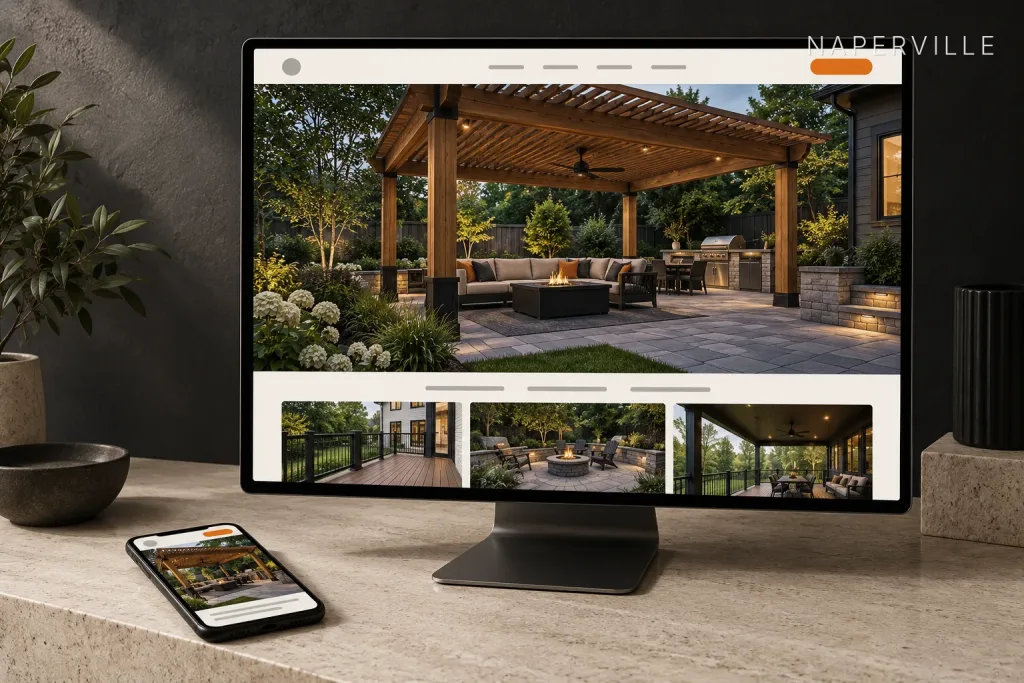
The core of a good contractor website is clarity. A visitor should know within seconds what you do, where you work, and how to reach you. The most effective contractor content marketing focuses on showing, not just telling. That means a project gallery with clear before-and-after photos, case studies that explain the job from start to finish, and testimonials from real clients. These elements build credibility without needing a sales pitch.
Think of it this way: a potential client lands on your site and sees a well-organised portfolio of recent work. The photos are high resolution, the captions explain the challenge and the solution, and the results are easy to see. That alone can convince someone to call. On the other hand, a site with no photos or with images that look like they were taken on a flip phone from 2010 will make the visitor wonder if you have done any work recently.
Trust signals that work
Beyond a photo gallery, a contractor website should include licence information and a service guarantee. These are simple details that reassure a client that you are legitimate and that you stand behind your work. Licence numbers, bond details, and insurance information are easy to add and provide a big return in trust. Likewise, a clear service guarantee, such as a warranty on labour or materials, tells the client that you are confident in what you do.

Testimonials also play a key role. A few well-written quotes from past customers, with their names and maybe a photo of the finished project, can be more persuasive than any advertisement. They are social proof that other people had a good experience and were happy with the outcome.
How content marketing fits in
Contractor content marketing is not just about having a website. It is about what that website says and how it speaks to the people who visit. The content on a contractor site should answer the questions a client has before they call. What should I expect during a roof replacement? How long does a kitchen remodel take? What kind of warranty do you offer? A blog or a FAQ section that addresses these topics shows expertise and builds confidence. It also helps the site appear in search results when someone searches for those exact questions.
A well-planned content strategy can also include case studies that show the process from start to finish. A case study about a difficult bathroom renovation, with photos and a timeline, demonstrates problem-solving skills and attention to detail. It is the kind of content that a potential client can read and think, "This contractor does exactly what I need."
It is also about brand consistency. If your website looks professional and your truck looks clean, your crew wears uniforms, and your business cards match, that consistency reinforces the message that you are a reliable, organised business. Inconsistent branding, like a modern website but an old logo or mismatched colors, can confuse a potential client.
What a bad website costs you
An outdated contractor website does not just look bad. It can actively cost you work. Imagine a homeowner searches for "roof repair near me" and finds your site. They click the link, and the page takes ten seconds to load. The layout is broken on their phone. The contact form does not work. They click away and call the next result. That lost lead might have been a $5,000 job. Over a year, those lost calls add up to real money.
Website usability is a big factor. A site that is hard to navigate on a phone, with tiny buttons or text that requires pinching to read, will frustrate users. Most local searches happen on mobile devices. If your site is not mobile-friendly, you are effectively invisible to a large chunk of potential customers.

Another hidden cost is the impression of being behind the times. A site that looks like it was built in the early 2000s suggests that the contractor has not invested in their business recently. It can make a client wonder if the contractor still uses modern tools and methods. That doubt can be enough to make them choose someone else.
How to fix an outdated site
The good news is that updating a contractor website does not have to be complicated or expensive. The most important steps are straightforward:
- Use a clean, modern design that works on all devices, especially phones and tablets.
- Replace blurry or outdated photos with high-quality images of recent work.
- Add clear calls to action, such as a phone number at the top of every page and a contact form that works.
- Include a project gallery or case studies that show the full range of your work.
- Keep the site fast by optimising images and using a reliable hosting service.
Each of these steps builds on the next. A fast, mobile-friendly site with a strong portfolio and easy contact options is a powerful tool for winning new clients.
Content that does the selling for you
One of the most effective approaches in contractor content marketing is to let your past work speak for itself. A project gallery, a case study, a testimonial - each of these is a form of marketing that showcases completed projects. When a potential client sees real examples of your work, they can picture you doing the same for them. This kind of marketing that showcases completed projects is more convincing than any generic sales pitch because it is based on actual results.
To make this work, take good photos of every job you finish. Write a short description of the challenge, the solution, and the outcome. Ask satisfied customers if you can use their name and a quote. Collect these pieces and put them on your site in a dedicated portfolio section. Update it regularly. Over time, this collection becomes a rich resource that helps you stand out from competitors who have not bothered to document their work.
What to ask a web designer or agency
If you decide to hire someone to build or update your site, ask the right questions. Does the designer understand the local market? Do they have experience with contractor websites? Can they show you examples of similar work? Will the site be optimised for search engines so people can find it? A good agency will also talk about content strategy, not just design. They should ask about your target clients, your service area, and what makes your work different.
Lemur Marketing, located at 1574 Henry Ave, Des Plaines, IL 60016, USA, can be reached at +1 630-551-8493 for those interested in discussing website design and local SEO services.